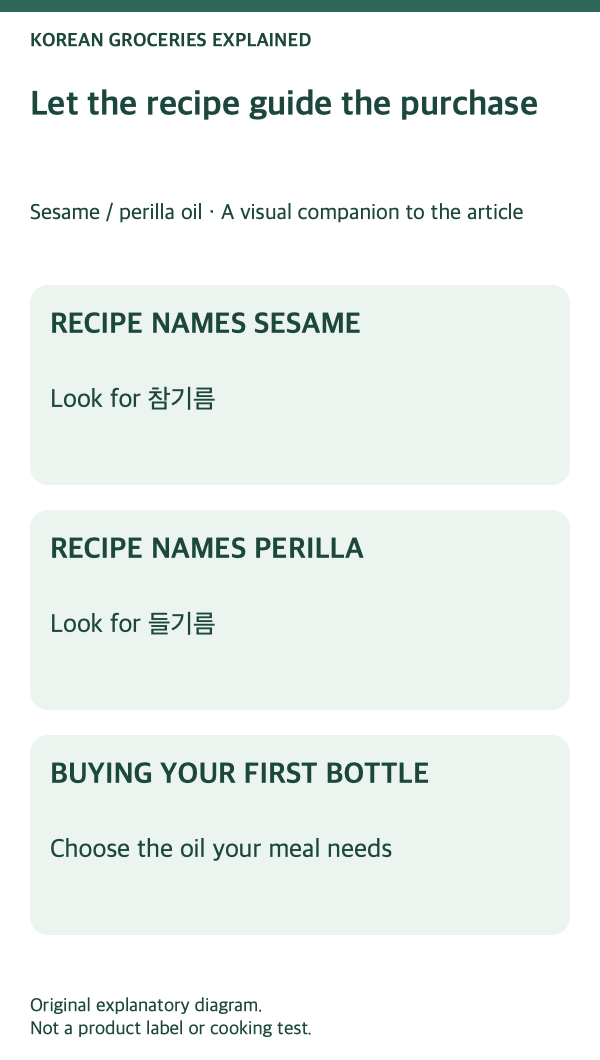
참기름, chamgireum, is sesame oil. 들기름, deulgireum, is perilla oil. If your recipe names one, buy that oil first. The bottles may sit together on a Korean grocery shelf, but the seed names give you a dependable way to tell them apart.
For concrete examples, Sempio lists whole sesame seeds for its Premium Whole Sesame Seed Oil and whole perilla seeds for its Premium Whole Perilla Seed Oil. Those ingredient lists identify the two products clearly without relying on bottle color or an English word such as “nutty.”
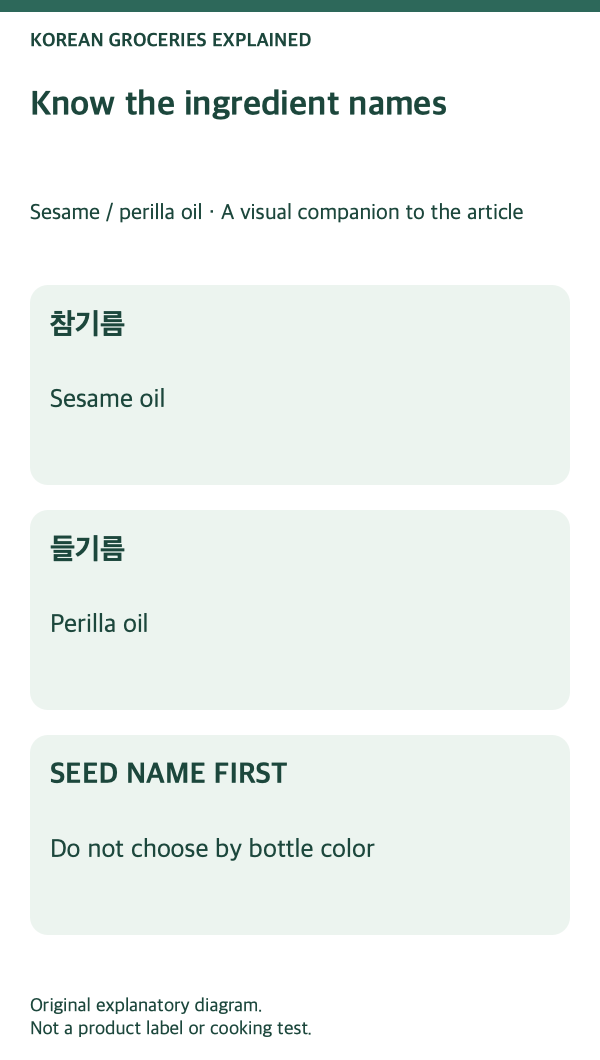
Sesame oil: match 참기름 to the recipe
Sesame oil appears in a variety of Korean dishes. Sempio recommends its premium sesame oil for side dishes, rice dishes and finishing dips, including oil mixed with salt. These are suggested uses for that product, rather than instructions to replace every other cooking oil with it. Manufacturer's sesame-oil guidance
One practical example is the maker's japchae recipe, which adds sesame oil when combining the cooked ingredients and sauce. If that is the recipe you plan to follow, sesame oil has a clear job on your shopping list.
Check whether the bottle describes roasted or toasted seeds if your recipe specifies that style. Sempio's cited premium product uses roasted sesame seeds. Keep the distinction between the seed and its treatment in mind: “sesame” identifies the ingredient, while roasting information describes how that particular oil was made.
Perilla oil: look for 들기름 and 들깨
Perilla oil is made from perilla seeds, called 들깨, deulkkae. Sempio recommends its premium perilla oil for side dishes, rice dishes and finishing dips too. That overlap explains why the two oils can appear in similar parts of a meal; it does not establish that their flavors are identical. Manufacturer's perilla-oil guidance
For a dish that puts perilla oil at the center, look for 들기름 막국수, deulgireum makguksu. The Korea Tourism Organization describes it as buckwheat noodles seasoned with perilla oil, with seaweed and ground sesame as additions. It gives a perilla-oil purchase a specific purpose, just as the japchae example above does for sesame oil. Official dish description
Preparation style is another choice within this category. The cited premium perilla oil is made with roasted seeds. The term 생들기름, saeng-deulgireum, is used for unroasted perilla oil; Sempio's product explanation for 생들기름 explicitly describes pressing the seeds without roasting. The product is no longer sold on that listing, which serves here as a terminology example.
When comparing two perilla oils, check the process description before assuming they are the same style. Follow the recipe if it specifies roasted or unroasted oil.
Six Korean words worth recognizing
| Korean wording | English meaning | How to use it |
|---|---|---|
| 참기름 | Sesame oil | Match a recipe calling for sesame oil |
| 들기름 | Perilla oil | Match a recipe calling for perilla oil |
| 참깨 | Sesame seeds | Recognize the seed in an ingredient list |
| 들깨 | Perilla seeds | Distinguish perilla from sesame |
| 생들기름 | Unroasted perilla oil | Check whether this is the style requested |
| 원재료명 | Ingredients | Read what is actually in the bottle |
Sempio's Korean oil guide identifies 참깨 and 들깨 as the respective seeds used in its sesame and perilla oils. Learn those two seed names alongside the oil names; it makes both the front and back labels more useful.
Which should you buy first?
Use the next two recipes you intend to cook as a simple decision aid:
- If both name sesame oil, buy sesame oil and leave perilla oil for a recipe that uses it.
- If you plan to make deulgireum makguksu, put perilla oil on the list and check the recipe for its requested style.
- If the recipes name different oils, decide whether you want to cook both dishes now. Buying one oil for one planned dish is a reasonable start.
- If a recipe says only “oil,” check its ingredient notes. Do not assume that a Korean dish automatically requires either of these two oils at every stage.
This keeps a first grocery trip manageable and gives each bottle a specific purpose.
Compare the bottle you will actually use
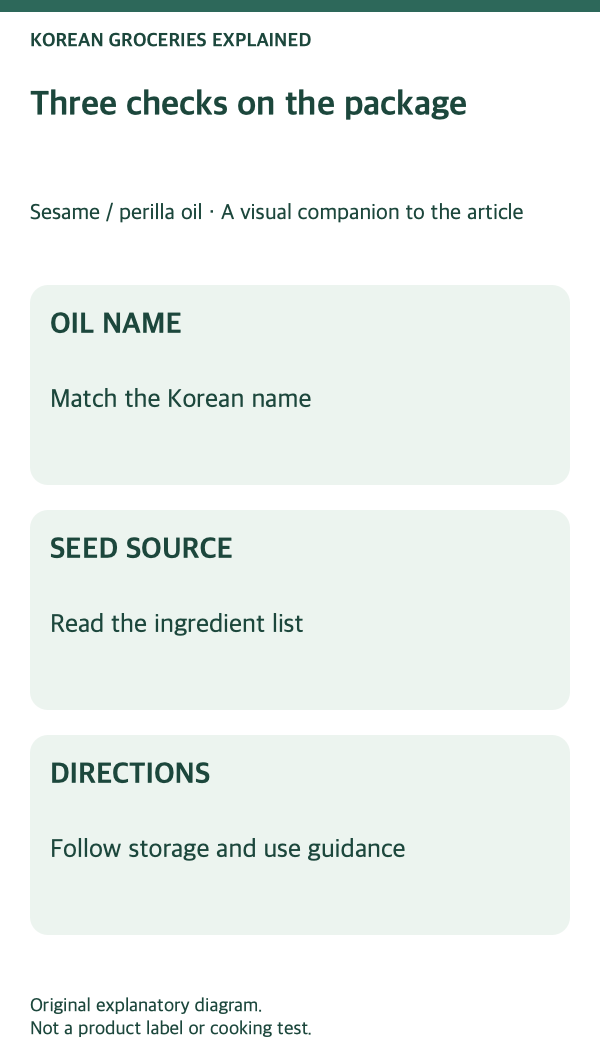
For online shopping, seek a readable ingredient panel and preparation description. If an allergy or dietary requirement matters, review the current ingredients and allergen statements instead of treating a seed-name translation as a suitability guarantee.
Also read the bottle's storage instructions, including any directions after opening. Choose a size that fits your planned cooking and the space you have for storing it as directed. There is no need to buy both oils or the largest bottle simply to make a pantry look complete.
Sources checked October 13, 2026. Uses and ingredients attributed to manufacturers are product-specific. No tasting comparison or health ranking is claimed.