For a first Korean grocery trip, choose two dishes, open the recipes you will follow, and buy their missing ingredients. A short list tied to actual meals is easier to use than a large collection of sauces and powders with no cooking plan.
The aim is to finish the trip with everything needed for those dishes. You can add more pantry ingredients when a later recipe gives them a job. The method below works whether you prefer to make each sauce yourself or begin with a prepared sauce.
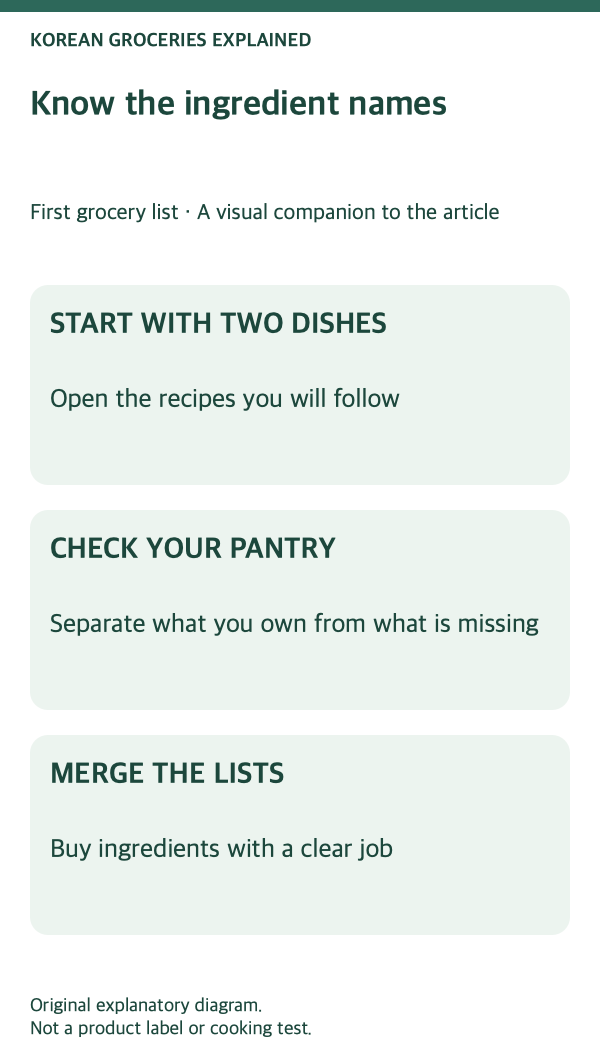
Choose the recipe before the ingredient collection
The same dish can lead to different shopping lists. For example, Sempio publishes a tteokbokki recipe using gochujang and other seasonings and another using a prepared tteokbokki sauce.
Choose one approach before shopping. Combining both ingredient lists can mean buying a ready-made sauce and the ingredients for another sauce you never intended to make. Neither route needs to become a rule for all your future cooking; decide what suits this meal.
Read the whole recipe once, including any ingredient notes and substitutions. Then set the number of servings you want. This gives you quantities to shop against and highlights any equipment or preparation step you need to plan for.
Three starter paths to consider
The following are examples of how to organize a shop, not complete recipes or universal ingredient lists. Use the linked recipe for its exact quantities and method.
A noodle meal with prepared seasoning
For bibim-guksu, Sempio's bibimjang recipe uses somyeon with a prepared mixing sauce, cucumber, egg, sesame oil and sesame seeds. If you choose that version, the specialist purchases are easy to identify: the requested noodles and sauce, plus any listed ingredient you do not already own.
Before adding another noodle sauce, ask whether it serves either of your two chosen dishes. If it does not, leave it for another trip.
Japchae with a clear sauce choice
Sempio's prepared-sauce japchae recipe uses glass noodles, japchae sauce, beef, carrot, spinach and sesame oil. Use that list only if you intend to follow that version. A recipe making its seasoning separately will give you a different sauce shopping list.
Copy the noodle name carefully. “Noodles for japchae” is more useful than “Korean noodles,” and the recipe's exact term is better still.
Savory pancakes with a dipping sauce
For a pancake meal, include the batter ingredients, additions and dipping sauce as separate parts of the list. Sempio's pancake example uses a vegetable pancake mix and lists a separate soy-sauce-and-vinegar dip. The mix alone is therefore not the complete shopping plan.
Read the ingredients even when a recipe title sounds familiar. This particular manufacturer's example lists chives and shrimp. Choose it because you want that version, rather than assuming the title tells you every ingredient.
Turn two recipes into one usable list
Create four sections on paper or in a phone note:
- Already at home. Check the cupboard before adding staples such as sugar, salt, flour or oil. Compare the exact item with the recipe rather than assuming every sauce with a similar name will do.
- Shared between the dishes. Add together the recipe quantities for any ingredient both use.
- Needed for one dish. Keep the dish name beside each specialist item so you remember why it is on the list.
- Optional. Separate garnishes or additions that the recipe itself labels optional.
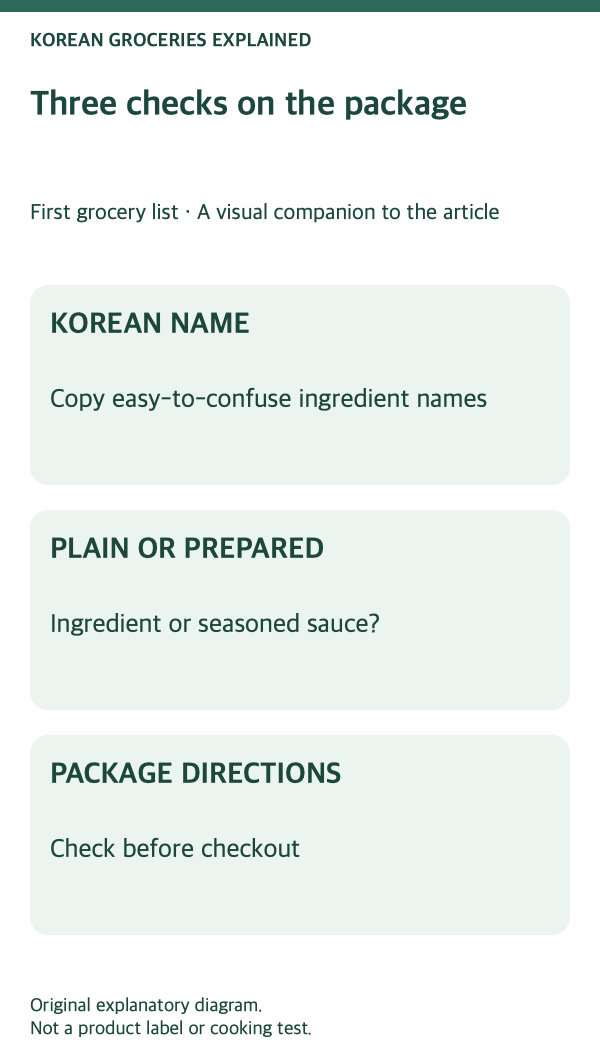
A worked list for bibim-guksu and japchae
If you choose the two prepared-sauce noodle recipes linked above, your combined ingredient checklist looks like this:
- Used in both dishes: sesame oil.
- For bibim-guksu: somyeon, bibimjang, cucumber, egg and sesame seeds.
- For japchae: glass noodles, japchae sauce, beef, carrot and spinach.
Cross out what you already have, then copy the amounts from each recipe for the number of servings you want. Add the sesame-oil amounts together so that shared ingredient appears only once on the buying list. The separate noodle and sauce entries make clear that these two dishes do not use one interchangeable noodle kit.
If you want to reduce the number of specialist purchases, begin with one of these dishes. The unused recipe can become a later shopping plan; there is no need to buy its ingredients today.
Copy Korean names for the easy-to-confuse items
| English shopping note | Korean wording to save | Useful distinction |
|---|---|---|
| Glass noodles | 당면 | Match the noodle requested for the dish |
| Thin noodles | 소면 | Check the full name and ingredients |
| Savory pancake mix | 부침가루 | Confirm it is the requested batter mix |
| Sesame oil | 참기름 | Keep it separate from 들기름, perilla oil |
| Rice cakes for tteokbokki | 떡볶이떡 | Check shape, ingredients and kit contents |
| Rice-cake soup slices | 떡국떡 | Match the soup recipe's slices |
The manufacturer distinguishes thin wheat noodles from glass noodles, while Pulmuone lists several rice-cake types. Treat these names as starting points for identification and read the full label before buying.
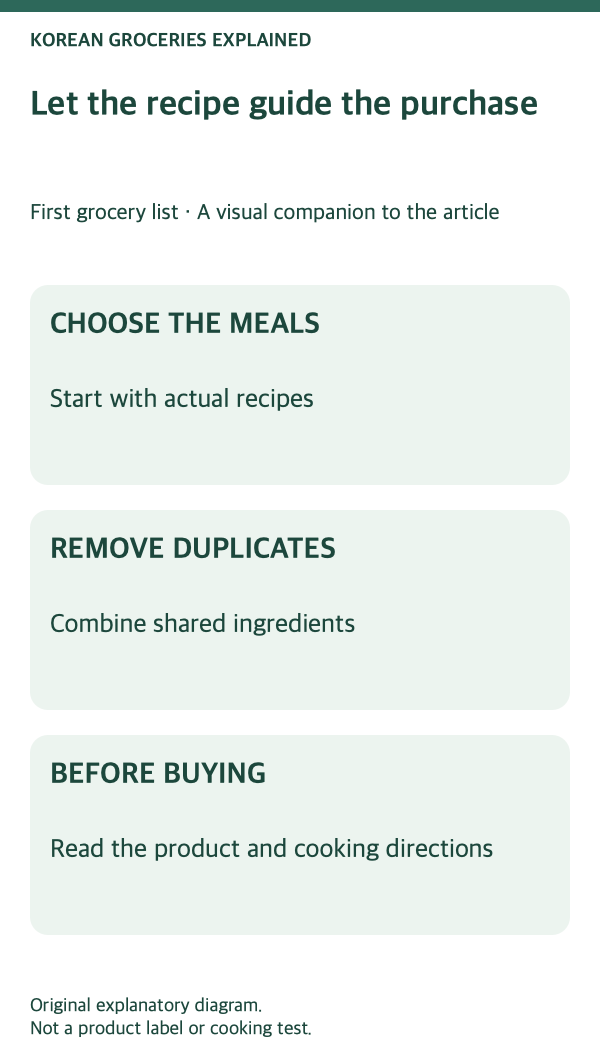
Check each new product before checkout
Make one final pass through the basket. Is the product plain, seasoned or part of a kit? Is the quantity sufficient for your plan? Can you follow its storage directions at home? If a dietary requirement matters, can you read the current ingredients and allergen information clearly?
If an important detail is missing online, look for the manufacturer's information or ask the seller for a readable label. Avoid filling a gap by guessing from a serving photograph.
Keep the final list with your recipes. After cooking, note the product you used and which ingredients remain. Your next grocery list can begin with a dish that uses those leftovers, letting the pantry grow around food you actually plan to cook.
Sources checked October 13, 2026. The shopping method is editorial guidance. Recipe examples come from the linked manufacturer pages; no cooking test, price claim or universal pantry requirement is implied.