Choose the starch named in your recipe, then check the ingredient list. On Korean packages, 전분 (jeonbun) means starch. 감자전분 is potato starch and 옥수수전분 is corn starch. A potato picture or a front name such as 감자맛전분 does not tell you everything in the bag. Look for 원재료명, meaning ingredients, before you buy.
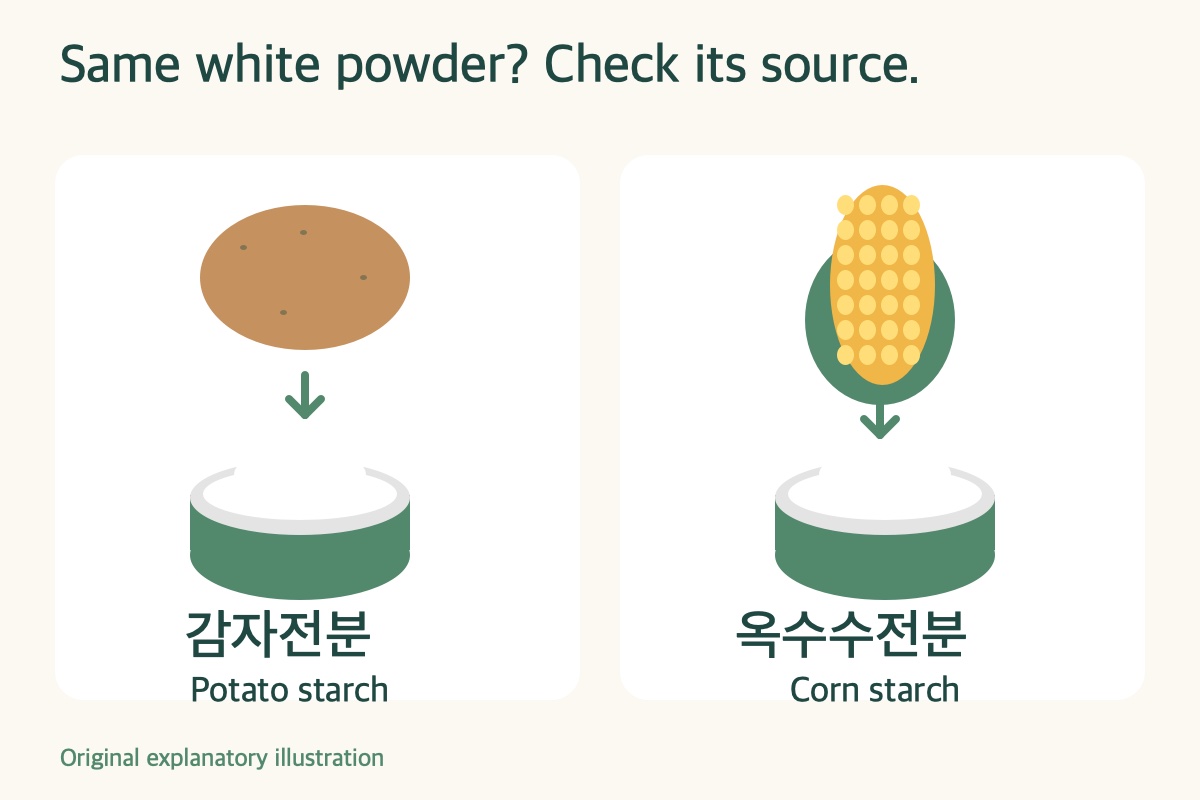
Start with these Korean label words
| Korean label | Meaning and next check |
|---|---|
| 감자전분 | Potato starch. Check whether other ingredients are included. |
| 옥수수전분 | Corn starch. Check the method and amount in your recipe. |
| 전분가공품 | A processed starch product. Read the full ingredient list. |
| 원재료명 원료명 |
Ingredients / raw ingredients. Check the starches, other ingredients and stated percentages. |
Bring the exact ingredient name from your recipe to the shop. If it asks for potato starch, start with 감자전분 rather than treating every white cooking powder as the same ingredient.
A real label example: potato starch with a little rice flour
On 26 October 2026, the official Otoki Mall detail image for 감자맛전분 300G listed 99% potato starch and 1% glutinous rice flour (찹쌀가루). Its product type was 전분가공품. This is one specific product example, not the formula for every bag with a similar name.
The useful shopping step is to turn the package over. Read the current bag or the listing for that exact size and market. If you need only potato starch for a particular recipe, an ingredient list containing something else deserves a second check.
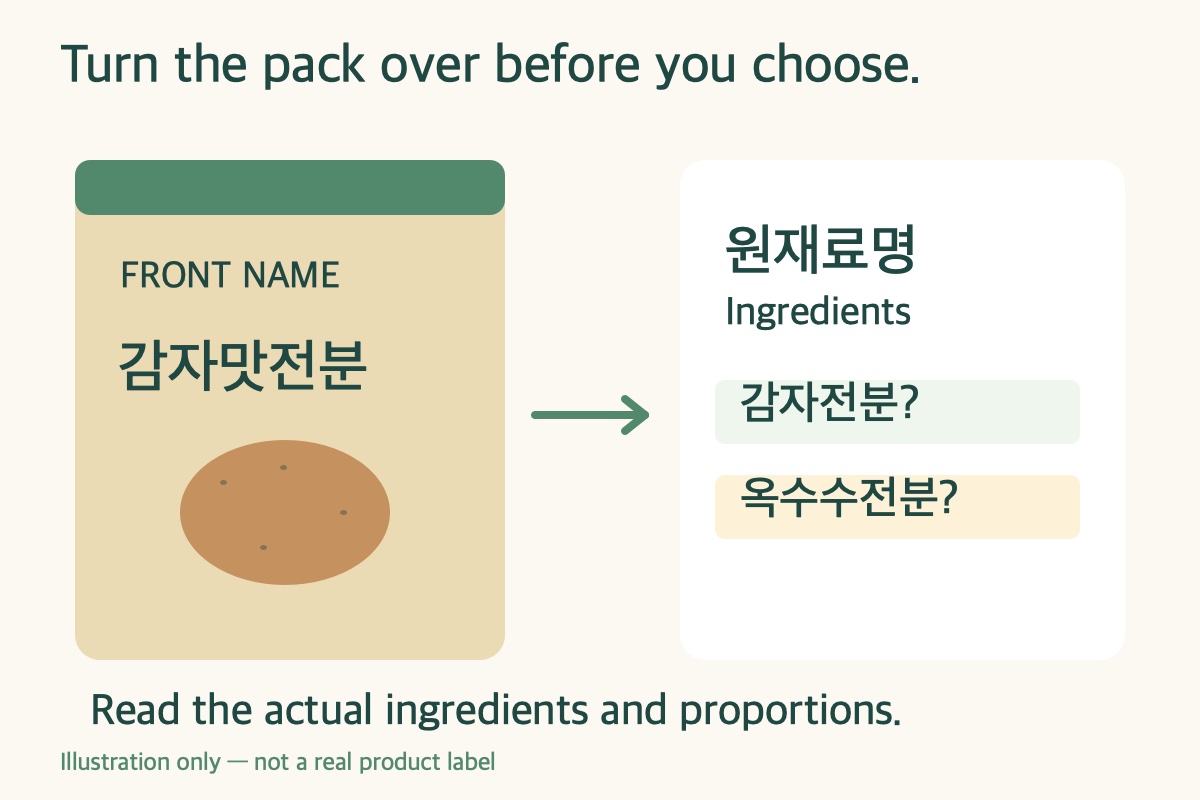
Starch and flour are different purchases
Potato flour is not another name for potato starch. Bob’s Red Mill explains that potato starch uses the starch portion, while potato flour uses the whole potato and has a potato flavor. Do not swap them just because both names include potato.
The same shopping habit helps with rice powders. If your recipe names 쌀가루 or 찹쌀가루, use our rice flour versus sweet rice flour guide. Those are separate choices from a bag sold as cooking starch. A prepared pancake or frying mix is another product again; check what the recipe actually requests.
For a sauce, check the mixing method too
A starch can be the right ingredient but still need the right method. For its corn starch, Argo advises mixing it with cold liquid before adding it to hot liquid to help prevent lumps. The manufacturer also gives cooking instructions for developing its thickening effect.
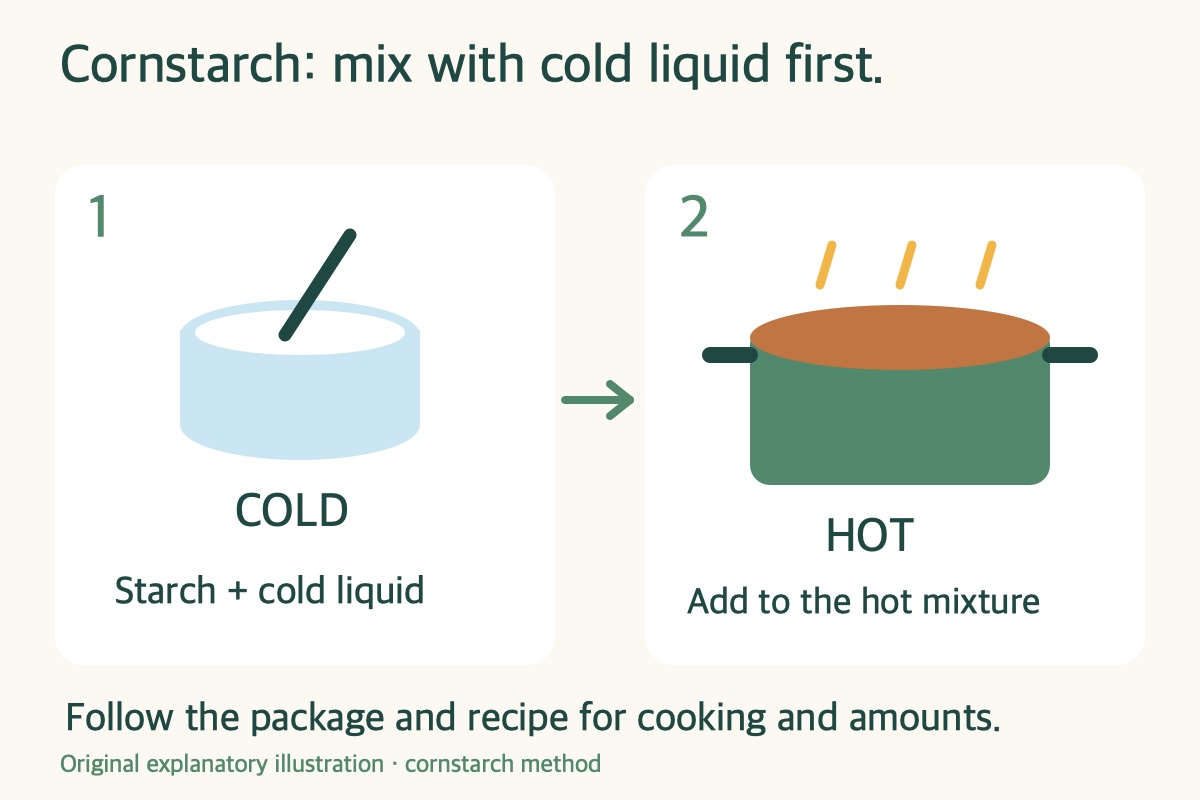
Use the directions for the starch you buy and the recipe you follow. This corn-starch example is not a fixed method or replacement ratio for every potato-starch recipe. There is no need to guess a universal spoon-for-spoon swap at the shelf.
A quick check before checkout
- Match the recipe: potato starch, corn starch, flour or a prepared mix?
- Read the ingredients: identify the starch source and anything else added.
- Check the method: sauce thickening, a coating and baking may call for different instructions.
- Read the actual package: use its storage, cooking and dietary information rather than relying on a front picture.
For a small first shop, buy the powder your planned dish needs. Our dish-first Korean grocery list can help keep that list focused.
Sources and review date
Reviewed 26 October 2026 by the KR Guide Info Editorial Team using the sources below. This is label research, not a product tasting or cooking test.
- Otoki Mall: 감자맛전분 300G and its official ingredient detail image — the specific 99% / 1% example.
- Bob’s Red Mill: potato starch and potato flour — why the names are not interchangeable.
- Argo: corn starch product instructions — the cold-liquid mixing example.
