For a recipe that calls for Korean glass noodles, such as a typical japchae, look for 당면, dangmyeon. For thin noodles in dishes such as bibim-guksu or janchi-guksu, look for 소면, somyeon. Check the complete product name and ingredients before buying: neither “Korean noodles” nor “vermicelli” is specific enough to settle the choice.
The distinction is visible in manufacturers' recipes. Sempio recommends its glass noodles for japchae, while its Korean recipe guides use somyeon for bibim-guksu and janchi-guksu. Start with the dish you want to make, then match its noodle.
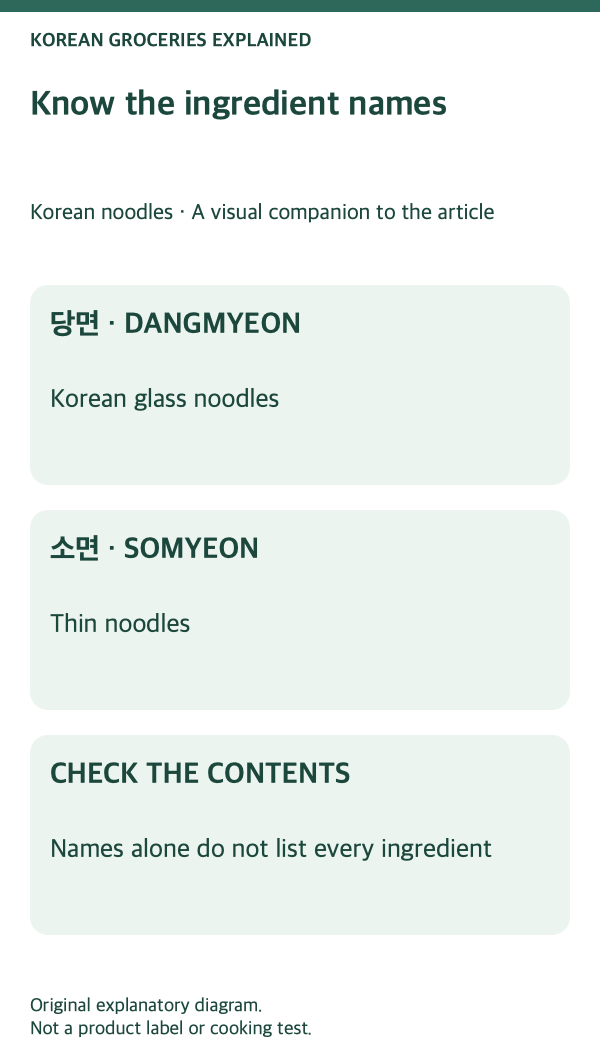
Dangmyeon is the glass-noodle option
Dangmyeon is the name to recognize when shopping for the translucent, springy noodles used in japchae. English packaging may say “glass noodles” or identify the starch used. The front of the bag should give you a starting point; the ingredient panel tells you what that particular noodle contains.
Do not assume every bag consists only of sweet-potato starch. Sempio's current English glass-noodle listing, for example, lists tapioca starch and sweet-potato starch, along with sodium alginate and cacao color. That is a product-specific example, not a formula for every brand of dangmyeon.
If your recipe specifies a particular width or product, keep that detail on the shopping list. A photograph of a finished dish can help with recognition, but it cannot tell you the noodle's formulation or preparation instructions.
Somyeon points you toward a thin noodle
Ordinary wheat somyeon is a useful starting point for many Korean thin-noodle recipes. Sempio's Soft & Thin wheat noodles list wheat flour and salt and are recommended for both hot and cold dishes. The name of the dish, rather than the serving temperature alone, therefore helps you choose.
There are also products with qualifying words before somyeon. Sempio's range includes 쌀소면, rice somyeon, and the maker describes a rice-based somyeon product made without wheat flour. Read the full phrase rather than treating the last word as a complete ingredient list.
This matters when shopping online. A search for “somyeon” can return ordinary wheat noodles and versions made from other ingredients. Select the exact product your recipe expects, especially when a dietary restriction makes the formulation important.
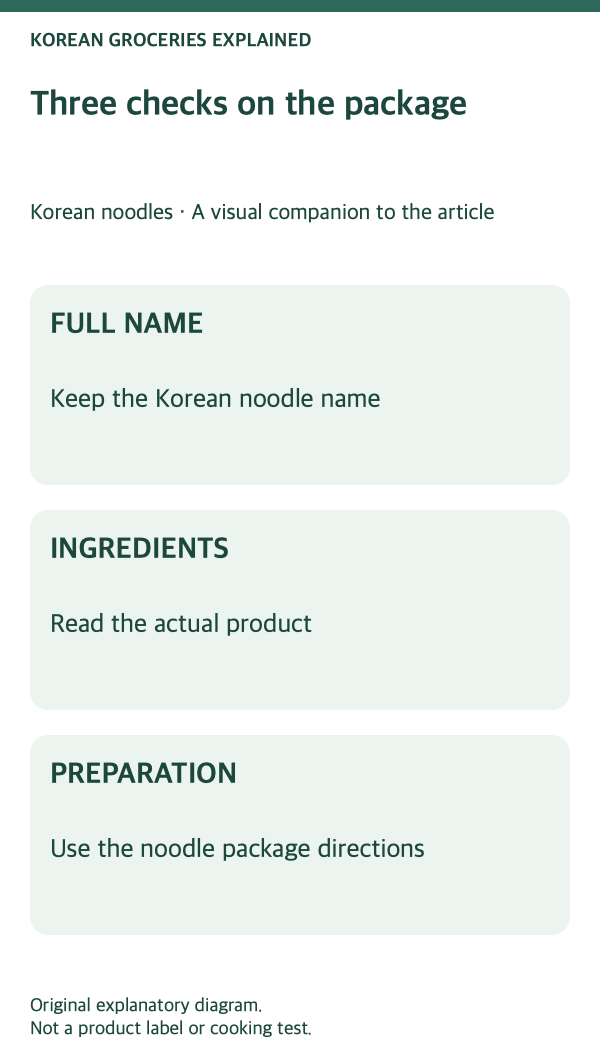
A short noodle-label glossary
| Korean wording | Meaning for the shopper | Useful next check |
|---|---|---|
| 당면 | Dangmyeon; glass noodles | Starch ingredients and noodle width |
| 소면 | Somyeon; thin noodles | Complete name and ingredient list |
| 쌀소면 | Rice somyeon | The actual rice-based formulation |
| 고구마전분 | Sweet-potato starch | Whether other starches are also listed |
| 밀가루 / 소맥분 | Wheat flour | Ingredients and allergen information |
| 조리방법 | Preparation instructions | Whether there is a separate soaking, boiling or rinsing step |
These terms help you read a label; they do not establish that any product meets an allergy or dietary requirement. Use the current package information and ask the manufacturer if something is unclear.
Use this two-question shopping check
First, what noun does the recipe use? Copy “dangmyeon” or “somyeon,” including any thickness description, into your list. If the recipe only says “noodles,” look for its ingredient notes before choosing a bag.
Second, are you buying plain noodles or a meal kit? Check the contents list. A prepared noodle meal may include a sauce or broth packet, whereas a bag of plain noodles leaves those ingredients to your recipe. Compare the amount of noodles you need with the package's stated contents, rather than assuming the total weight is all noodles.
For example, imagine shopping for japchae and seeing a wheat-noodle packet beside a glass-noodle packet. Even if both show vegetables in the serving photograph, the recipe's dangmyeon requirement is the useful clue. If you instead plan to follow a bibim-guksu recipe written for somyeon, carry that name into the shop.
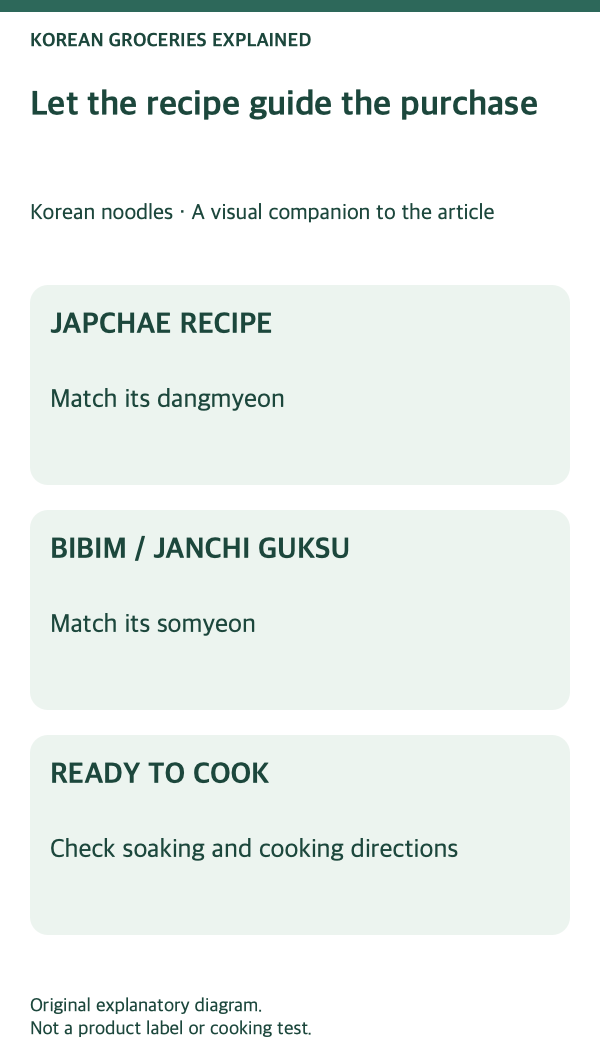
Follow the preparation for the noodle you bought
Read the package and recipe together before starting. Note which preparation steps belong to the noodle itself and which happen after it meets the sauce or broth. Avoid borrowing a cooking time from another kind of noodle simply because both bags have a similar weight.
If the requested noodle is unavailable, use a substitution suggested by the recipe author or choose a recipe written for the available product. That gives you a clearer starting point than an unexplained one-for-one swap.
Sources checked October 13, 2026. Product examples illustrate label differences, not brand rankings. Formulations and packaging may change.