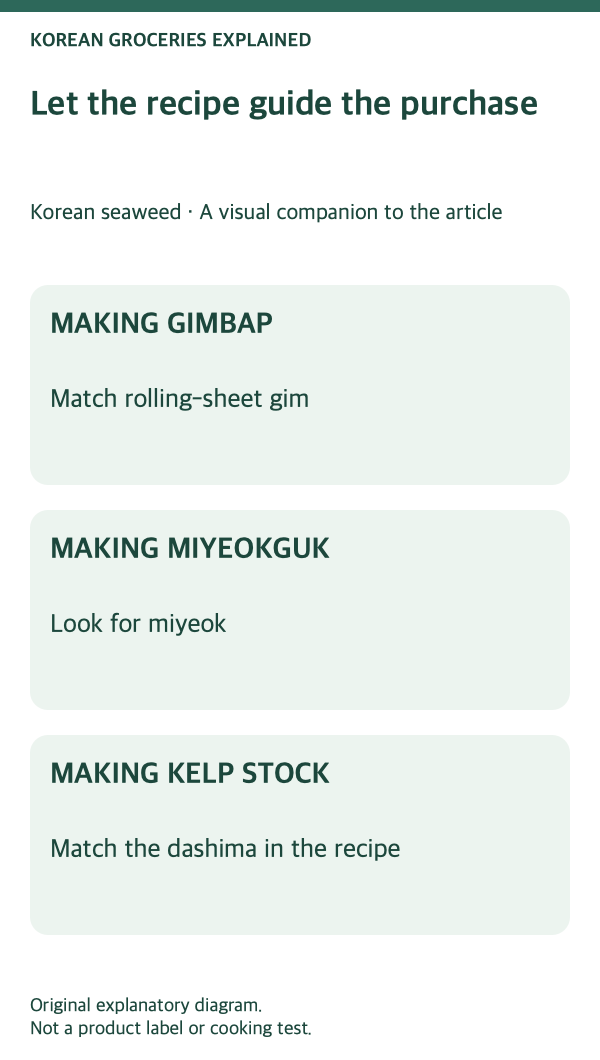
For gimbap, choose gim sheets intended for rolling. For miyeokguk, choose miyeok. For a recipe that requests kelp in its stock, look for dashima. These names identify different ingredients, even when an English shelf label calls all of them “seaweed.”
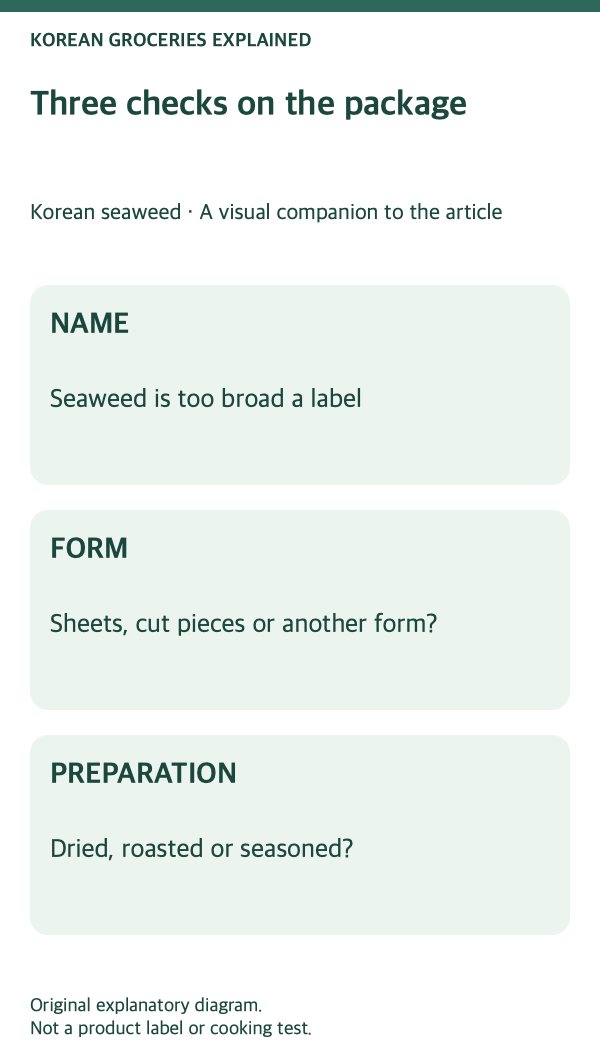
Start with the Korean name and then check the product's form. A seaweed can be sold cut, dried, roasted or seasoned, and that second description helps determine whether it fits your recipe.
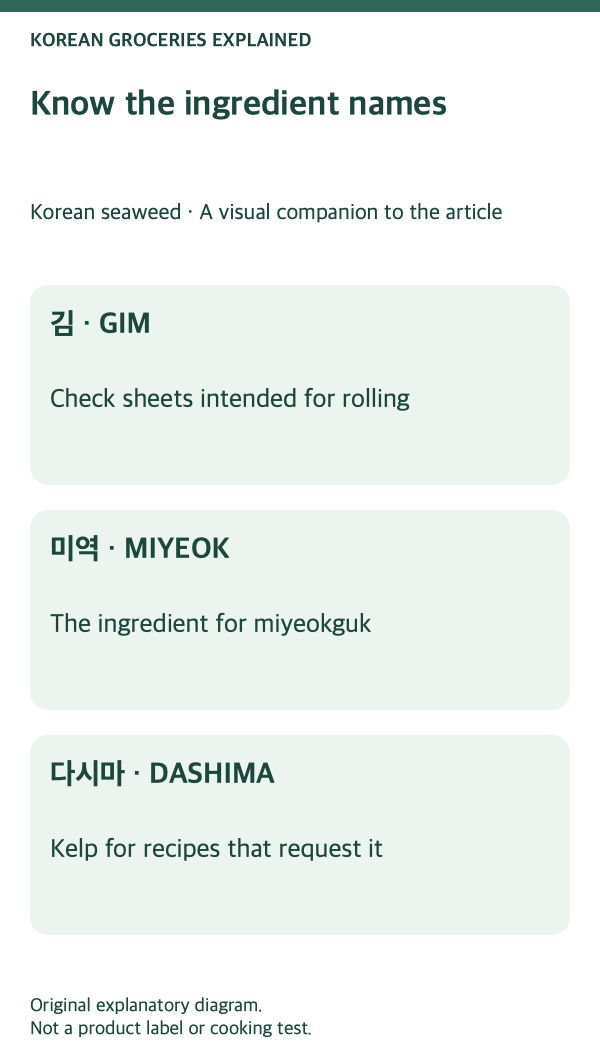
Three names, three shopping starting points
| Korean name | Name used here | What to look for when following a recipe |
|---|---|---|
| 김 | Gim | Sheets for rice rolls, or a specifically seasoned product for serving |
| 미역 | Miyeok | The seaweed named in miyeokguk; check whether it is dried and already cut |
| 다시마 | Dashima | Kelp; check the form and the recipe's stock-making instructions |
Otoki's Korean product categories separate 김, 미역 and 다시마. Keep those words in your shopping notes, especially when a translated listing is vague. The buying recommendations below refer to particular uses, rather than the only possible use of each ingredient.
Gim: distinguish rolling sheets from seasoned seaweed
For gimbap, the practical requirement is a sheet that can hold the rice and fillings. Sempio's Dried Seaweed for Sushi and Roll is made for that purpose and lists dried laver as its sole ingredient.
Seasoned gim is a different purchase. Godbawee's Table Seasoned Seaweed listing on K-FOODTRADE describes a ready-to-serve product containing laver, oils and salt. Its serving role and formulation differ from the unseasoned rolling-sheet example.
If you are making rolls, confirm that the package contains suitable full sheets and is recommended for rolling. If you are buying something to eat alongside rice, check the seasoning and serving instructions. “Roasted seaweed” without a sheet size or ingredient list leaves important questions unanswered.
Miyeok: buy the ingredient for miyeokguk
미역국, or miyeokguk, is a soup made with miyeok. The Korea.net recipe developed with the Institute of Traditional Korean Food uses dried seaweed that is soaked and cut before cooking.
That is why a packet of gim for rice rolls is not the product to buy when your shopping list says miyeok. The shared English word seaweed is too broad to settle the choice.
Check whether the product is already cut. Otoki distinguishes its regular dried miyeok from 자른미역, cut miyeok. Pre-cut pieces may simplify preparation, but you should still follow the product and recipe instructions. Do not assume that “cut” means ready to eat without preparation.
Also check what your recipe's quantity refers to. If it specifies dried miyeok, measure that ingredient at the stated stage instead of guessing from a bowl of soaked seaweed. Different preparation stages should not be treated as the same measurement.
Dashima: identify the kelp and its job in the recipe
다시마, written here as dashima, is kelp. Otoki sells it under the English name Kelp, as well as a separate Cut Kelp product.
Kelp can contribute to a stock: K-FOODTRADE's budaejjigae recipe starts with dried kelp and anchovies in water. When following a stock recipe, match its amount and preparation method rather than apply one timing rule to every dish.
Dashima is not limited to stock-making. Otoki's seaweed cooking feature also includes a braised kelp dish. Whether the kelp is served as part of the meal or used during preparation depends on the recipe.
A two-step check for an unclear online listing
First, identify the ingredient. Does the label say 김, 미역 or 다시마? If that information is missing, ask for a readable package photograph.
Second, identify its form and additions. Is it cut or whole? Does it contain seasoning? Is it sold for rolling, soup preparation or ready-to-serve use? A correct ingredient name does not automatically mean the package is in the form you need.
For example, a listing titled only “Korean dried seaweed” is not enough to finish a shopping order for miyeokguk. Confirm 미역 and the preparation directions before choosing it.
What to buy first
Buy around one planned dish. Choose rolling gim for your first gimbap, miyeok for your first miyeokguk, or the dashima requested by your chosen stock recipe. You do not need all three to begin cooking Korean food.
Keep each package's name and instructions with your recipe notes. Follow its storage directions, and check the current ingredient and allergen information for any seasoned product.
Sources checked on October 13, 2026. Examples concern shopping and cooking roles; this guide makes no nutritional or medical claims.