For a recipe that asks for Korean fermented soybean paste, buy doenjang. For a prepared wrap dip, look for ssamjang. A third product, soybean-paste stew seasoning, may sit nearby. It can help you make dinner quickly, but its directions are different from a recipe built around plain doenjang.
The central buying decision is how much seasoning you want the product to provide: a paste you build a dish around, a prepared dip, or a sauce formulated for a particular stew.
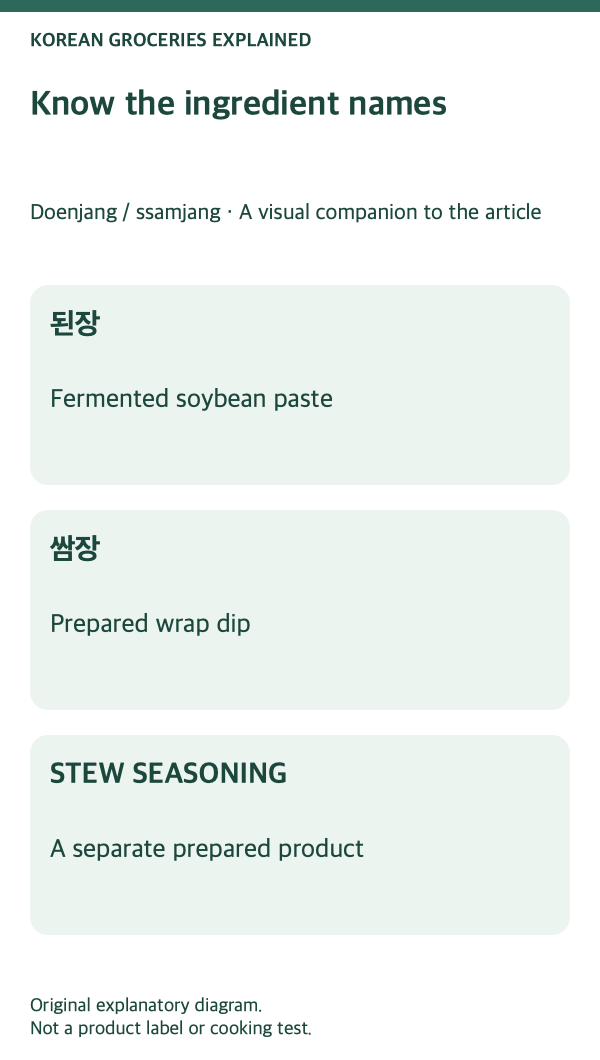
Doenjang is the soybean paste named in the recipe
된장, or doenjang, is fermented soybean paste. It seasons the broth in doenjang-jjigae, written 된장찌개. Korea.net's recipe, prepared with the Institute of Traditional Korean Food, shows this role: the paste goes into the stew alongside other separately listed ingredients.
For a product-label example, Sempio's Authentic Doenjang lists water, soybean, salt, distilled alcohol and a fermentation starter. Use that example to understand one formulation, rather than assume every doenjang has the same ingredient list.
If you are shopping from a recipe, copy the whole ingredient name. A photograph of a bowl of stew on the package does not tell you whether the contents are soybean paste or a more complete stew sauce.
Ssamjang comes with additional seasoning
쌈장, or ssamjang, is a seasoned dipping paste. Sempio's Classic Ssamjang, for example, includes red pepper seasoning, sweeteners, garlic, roasted sesame and ginger seasoning. The manufacturer recommends it for vegetables, grilled meat and lettuce wraps.
Those additions matter if you are trying to use the tub in a recipe that calls for doenjang. It contributes a combination of ingredients rather than only the soybean paste that the recipe names.
Think of the distinction as a shopping question: do you want to choose the seasonings yourself, or buy a product with a particular combination already included? Neither choice is inherently better; they solve different cooking tasks.
Watch for a third option: stew sauce
Products labeled 된장찌개양념 are seasonings for soybean-paste stew. The extra word 양념 means seasoning. Read the preparation instructions before adding one to a recipe that already measures out doenjang and other seasonings.
Sempio's Soybean Paste Stew Sauce, for instance, includes onion, garlic, shrimp extract and other ingredients, with directions for adding vegetables and water. Chung Jung One's Yorihansu doenjang-jjigae seasoning lists doenjang alongside beef-bone and vegetable extracts.
These examples show why “soybean” in a product name does not describe the entire contents. Check the current ingredients and allergen statement, especially if you avoid particular foods.
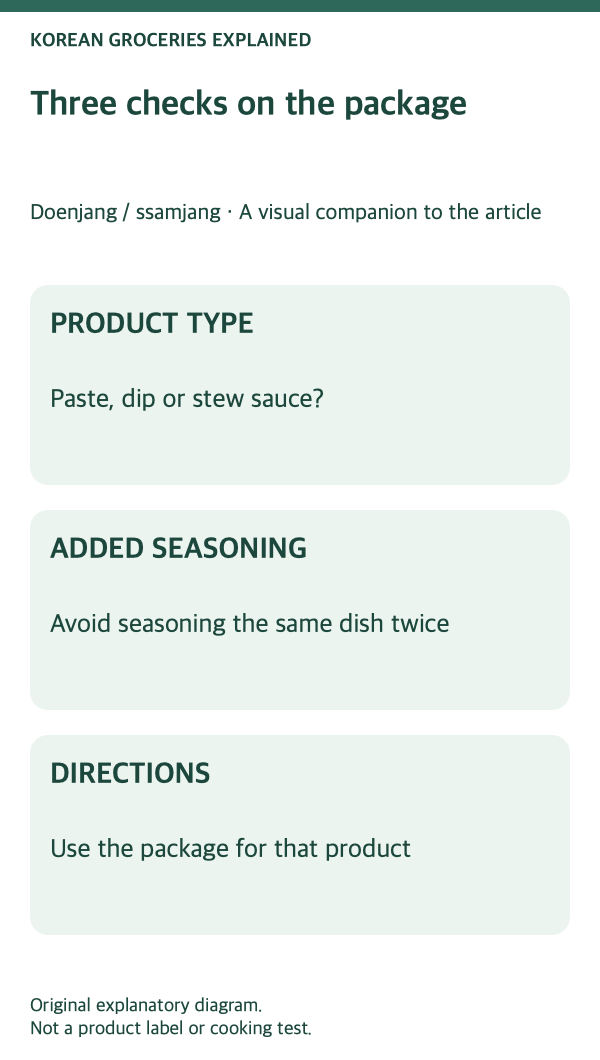
Choose by the amount of cooking you want to do
You have a recipe that lists doenjang
Choose a doenjang product that matches its ingredient notes. Keep the recipe's broth and additional seasonings separate on your shopping list. Do not replace the paste with a complete stew sauce merely because both packages picture doenjang-jjigae.
You want something to serve with wraps
Choose a ssamjang product with serving directions that fit your meal. Check its ingredients before deciding whether to add more garlic, sesame or other seasonings yourself.
You want a packet that helps assemble a stew
Choose a stew seasoning and follow its water quantity and ingredient directions. Treat the package as the starting point for that meal, rather than combine it automatically with a second full set of seasonings.
Can ssamjang be cooked?
Yes. The distinction above describes common shopping roles, not a rule against heating ssamjang. Sempio publishes a chickpea stew that uses ssamjang.
That is a useful way to use a tub you already own: find a recipe designed around it. It does not establish that ssamjang replaces doenjang in every stew, or supply a universal conversion between the two.
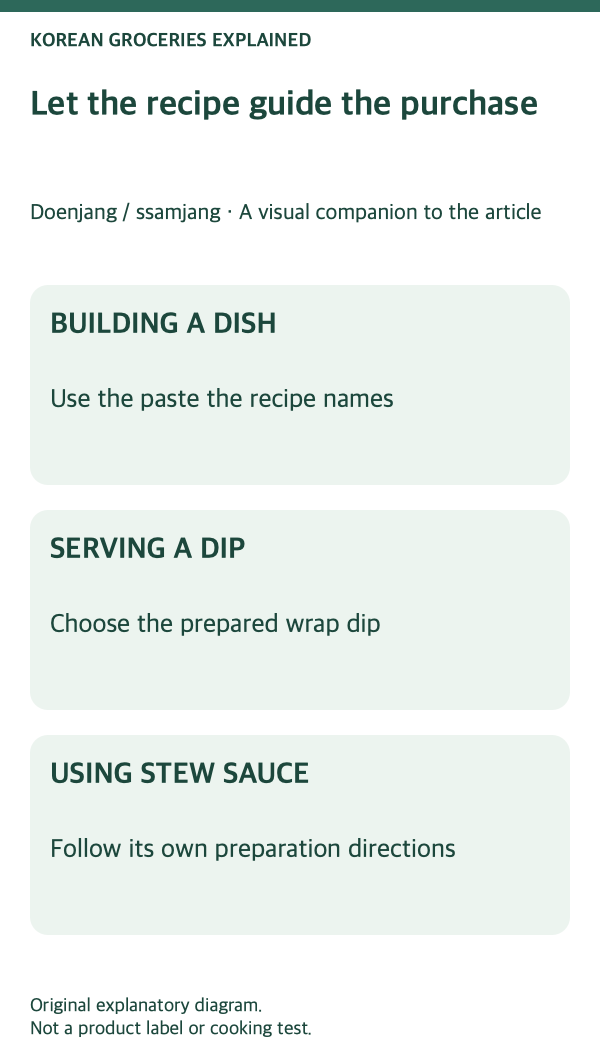
A label checklist that prevents duplicate seasoning
Before checkout, answer three questions:
- What is the full name? Doenjang, ssamjang or a stew seasoning?
- What has already been added? Read beyond the first ingredient.
- Whose directions will you follow? Your recipe's or the product's preparation instructions?
Save the product name with the dish you plan to make. That small note makes it easier to repeat the purchase and avoids relying on the color of the tub. For storage and handling after opening, use the directions on your own package.
Sources checked on October 13, 2026. This guide compares ingredient roles and named products, not brand quality. Ingredients and preparation directions can vary by market and change over time.