Choose 겨자분 (gyeoja-bun) when your recipe asks for mustard powder, 연겨자 (yeon-gyeoja) when it asks for prepared mustard paste, and 겨자냉채소스 when you want a mixed sauce for a cold salad. These names describe different starting points. A spoonful of each is not a fixed, equal replacement.
At a Korean grocery store, look at the full product name before choosing a yellow packet, tube or bottle. Then check the ingredients and directions on that exact pack. Packaging colour alone does not tell you what is inside.
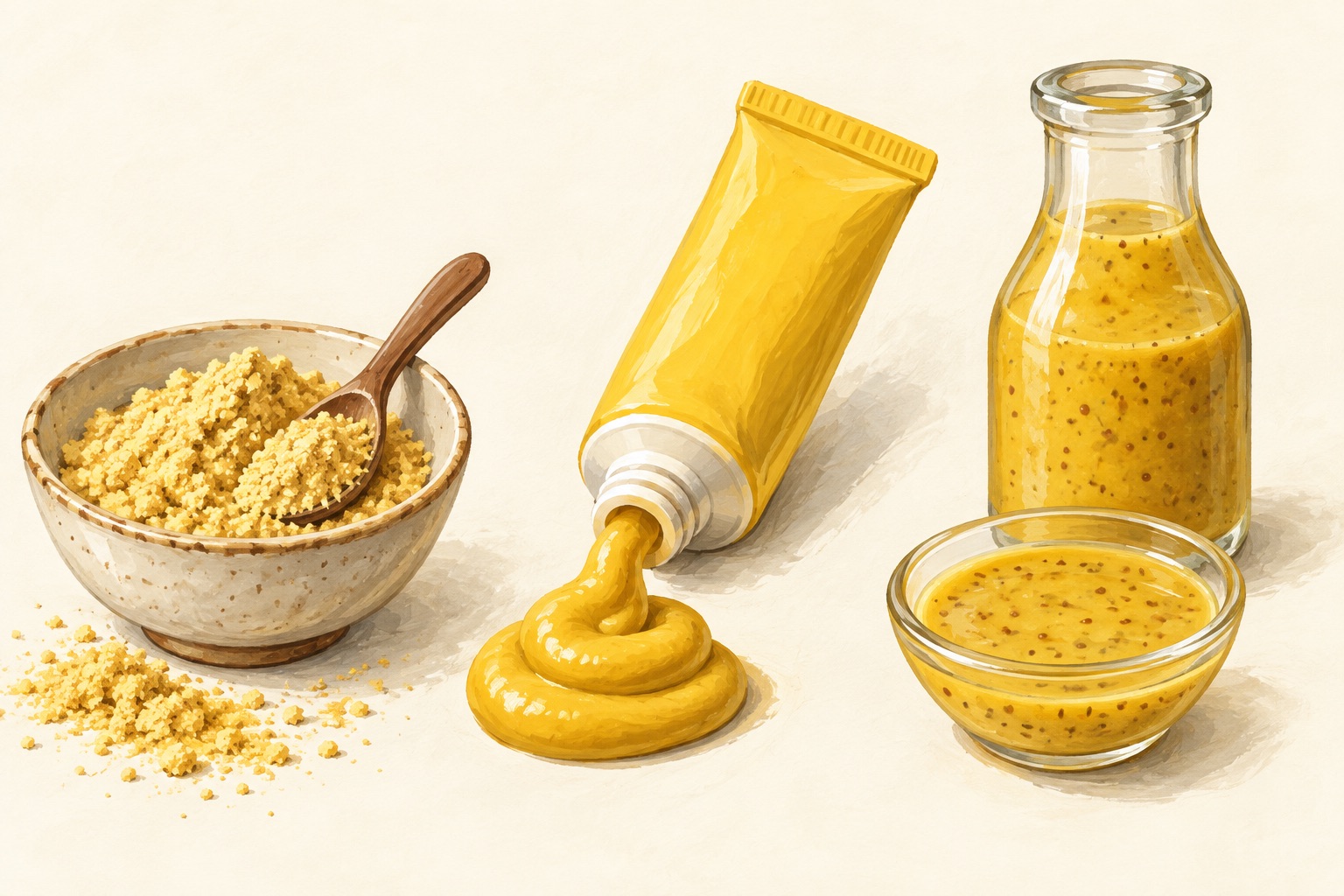
Three forms with different jobs
| Korean label | What to look for |
|---|---|
| 겨자분 Mustard powder |
A dry ingredient to prepare or mix as the recipe directs. |
| 연겨자 Prepared mustard |
A paste you can portion from a tube when a recipe calls for prepared mustard. |
| 겨자냉채소스 Mustard cold-salad sauce |
A mixed sauce; read its flavour and ingredient description before adding more seasoning. |
Ottogi’s official Korean store lists 겨자분, 연겨자 and 겨자냉채소스 as separate products. Its English product page describes prepared mustard as a tube condiment that can also be used to make sauces. The distinction is useful even when you shop for another brand: match the form first, then compare the actual label.
Read the whole name, then turn the pack over
겨자 means mustard, and 분 in 겨자분 refers to powder. 냉채 means a cold salad or cold mixed dish, while 소스 means sauce. A product named 겨자냉채소스 is therefore a different purchase from a packet of dry 겨자분.
Do not read 연겨자 as a promise of mild heat. The prepared-mustard page describes a sharp taste and aroma. The name does not give you a reliable heat comparison between brands, so avoid choosing a large amount based on the name alone.
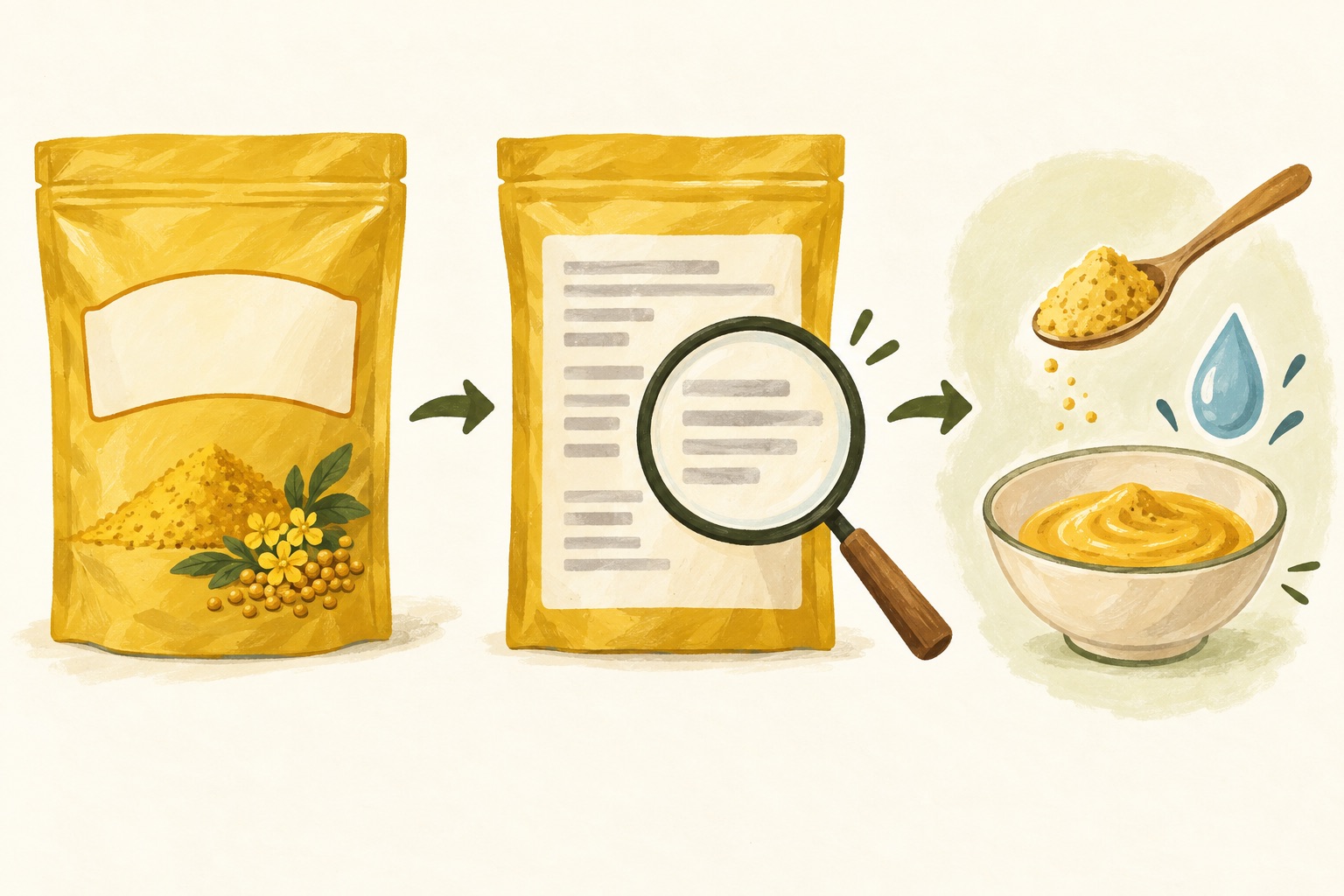
- 원재료명: ingredients. Compare the full list, not just the mustard name on the front.
- 함량: amount or content. Read what an indicated percentage refers to.
- 조리방법: preparation directions. Check how that product should be mixed.
- 보관방법: storage instructions. 개봉 후 means after opening; look for any separate instruction for the opened pack.
Match the recipe before changing the seasoning
If a recipe names mustard powder, buy powder and follow the pack’s mixing directions. If it names prepared mustard, start with a prepared paste. Do not copy a water ratio, water temperature or waiting time from a different product and assume it applies to yours.
A mixed cold-salad sauce is another starting point. In its 2019 recipe feature, Ottogi described its mustard cold-salad sauce as combining mustard and vinegar flavours. That older description explains the product type; it is not proof of the current ingredients in every bottle or export version.
Check your bottle before adding the vinegar, sweetener or other seasoning listed in a separate sauce recipe. For help choosing those ingredients, see our Korean vinegar label guide and mulyeot, jocheong and oligodang guide.
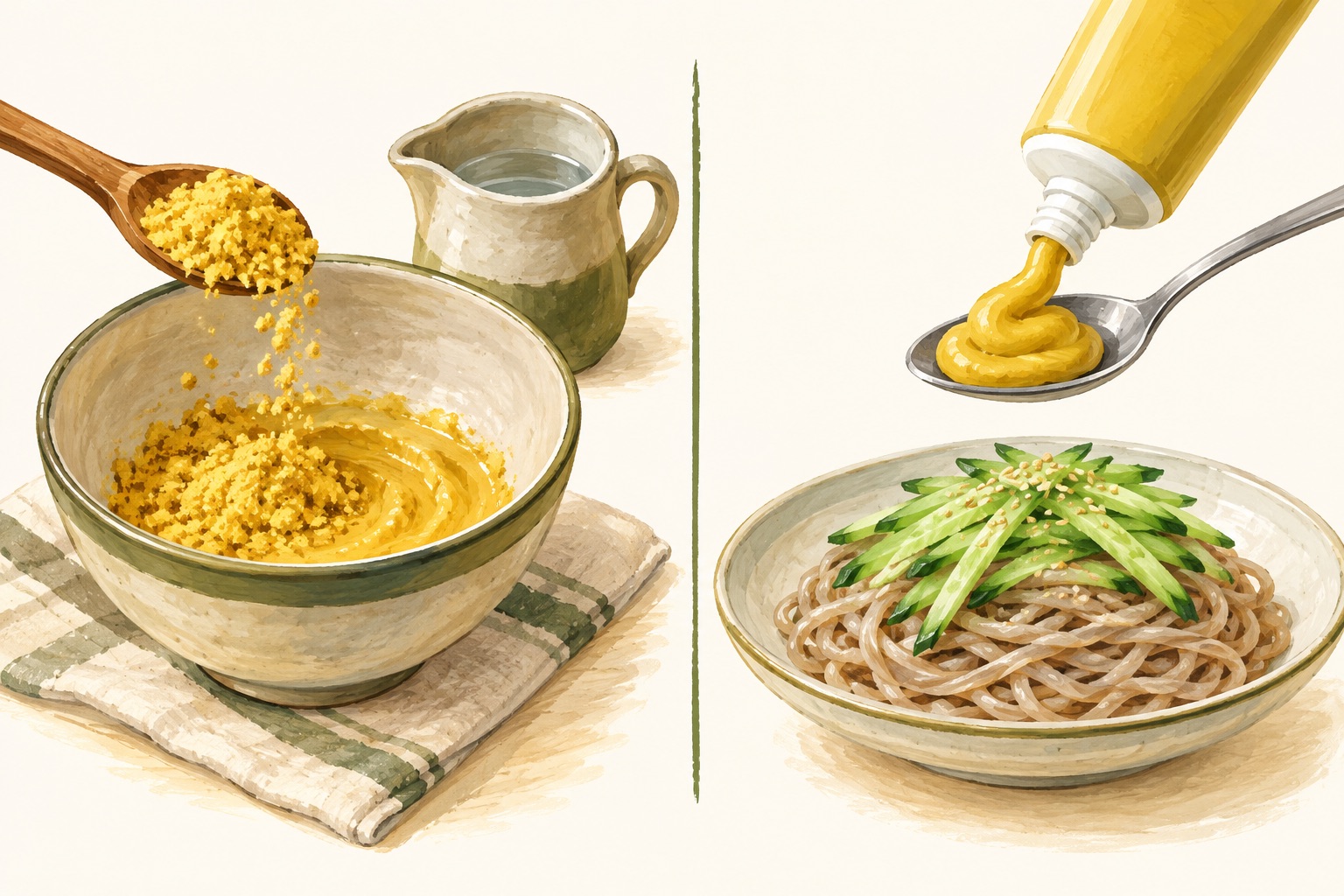
A quick check before buying
- Find the form named in your recipe: powder, paste or mixed sauce.
- Read the ingredients and any allergen statement on the exact product. A shared colour or similar name does not establish the same ingredients.
- Check preparation and storage directions, including instructions after opening.
- Choose a pack size you can use under those directions. Do not infer storage after opening from the shelf where the unopened pack was sold.
For a first shopping trip, our dish-first Korean grocery list can help you buy the form your planned meal needs.
Sources and review
- Ottogi official store: 겨자분 product listing and mustard product names.
- Ottogi: Prepared Mustard product description.
- Ottogi’s 2019 mustard cold-salad sauce feature, used for the product-type example above.
Reviewed on 25 October 2026 by KR Guide Info Editorial Team using manufacturer information and Korean label terms. Product formulas and directions can differ by pack and market. Illustrations explain the choices; no products were tested for this guide.