Buy gochujang when a recipe asks for Korean red chili paste. Buy ssamjang when you want a seasoned dip for lettuce wraps, vegetables or grilled meat. They can share ingredients, but they are different products. A tub of ssamjang is not simply a milder version of gochujang.
Gochujang is a fermented red chili paste. Ssamjang combines a soybean-paste base with chili and other seasonings. For a beginner, the most useful question is: am I following a recipe that needs an ingredient, or choosing a dip to serve with a meal?
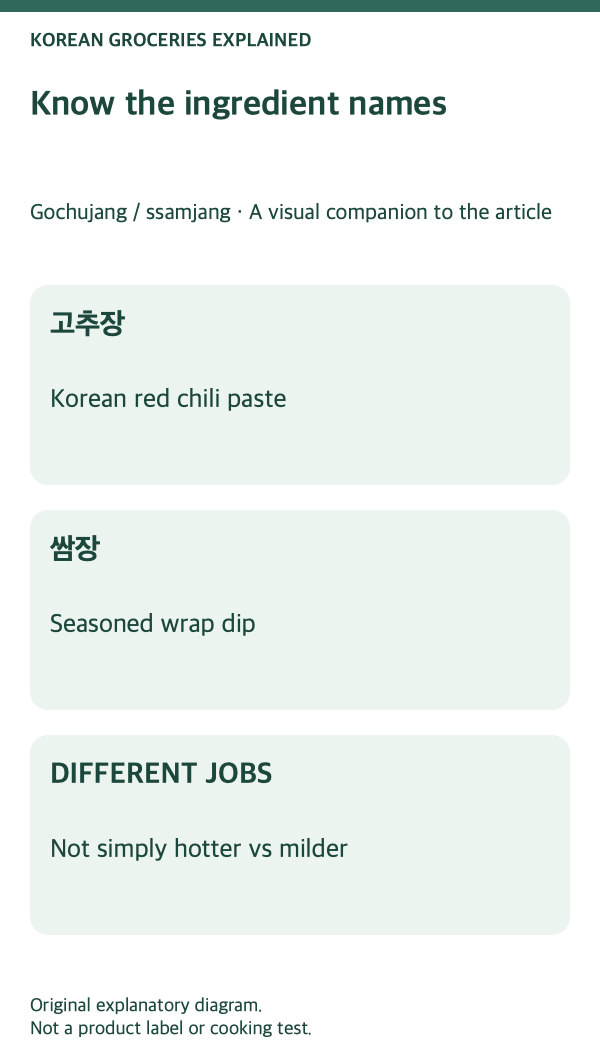
Two names to save on your shopping list
- 고추장 — gochujang: Korean red chili paste
- 쌈장 — ssamjang: a seasoned paste for ssam, food assembled in a leaf wrap
Keep the Korean word beside the English one when shopping. Packaging colors are easy to remember, but the full product name is a better way to identify what you are buying. Do not stop at an English phrase such as “hot paste” or “Korean sauce.”
Gochujang: choose the paste the recipe names
A recipe that lists gochujang expects that paste as part of its seasoning. Read its other ingredients before buying a product labeled “gochujang sauce,” because the sauce may already contain additions that the recipe asks you to measure separately.
For example, Sempio's Gochujang lists rice, red pepper powder, soybean and other ingredients. It also contains corn syrup and wheat-derived ingredients. This is a concrete product example, not a formula for every gochujang.
The same company sells a separate Gochujang Bulgogi Sauce. That product uses chili paste within a ready-to-use sauce and includes additional ingredients such as soy sauce and vinegar. Both names contain “gochujang,” but they belong on different shopping lists.
Ssamjang: choose a dip with its seasoning already built in
Ssamjang is a useful purchase when the missing part of dinner is the dip. Sempio recommends its Korean Soybean Dipping Paste with vegetables, grilled meat and lettuce wraps. Its ingredient list includes garlic, roasted sesame and sweeteners alongside the paste ingredients.
That tells you what to check when comparing tubs: which seasonings have already been added? Do not assume a spoonful will contribute only chili flavor. If you want a particular restaurant's dip, its homemade additions may also differ from those in a supermarket product.
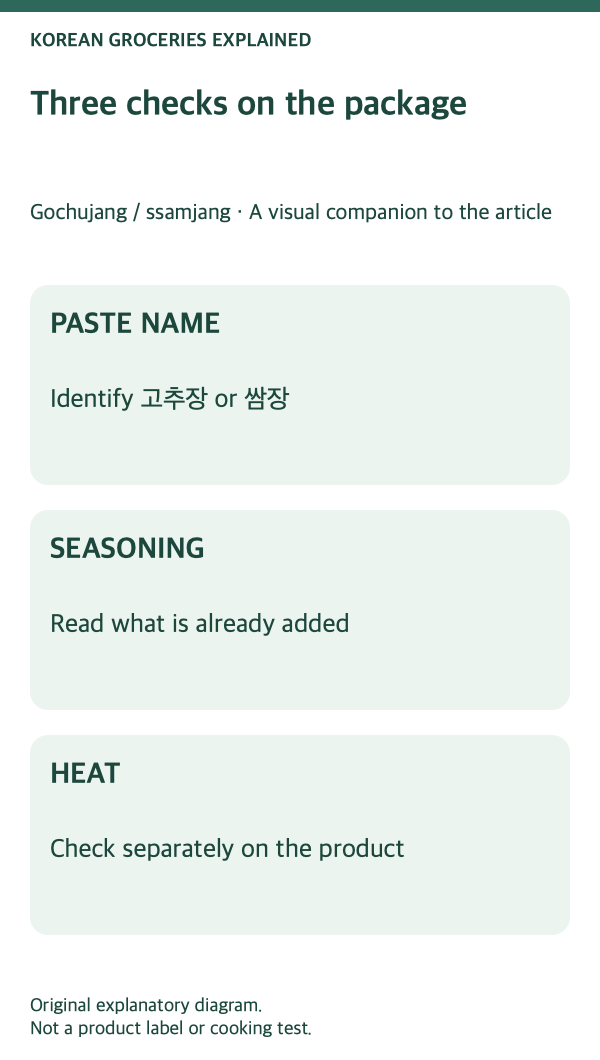
A three-question buying guide
1. Does your recipe name one of the pastes?
Buy that named paste first. Save a photo of the ingredient note if the recipe author specifies a brand or style. A clearly named ingredient is more useful than a guess based on the finished dish's color.
2. Are you buying a condiment for the table?
For a prepared wrap dip, start with ssamjang and read the serving suggestions. For a sauce you will mix yourself, use the ingredients in your chosen sauce recipe. “For barbecue” alone does not tell you whether a product is a marinade, glaze or table dip.
3. Does the label describe a complete sauce?
Look for the full English or Korean name and the preparation directions. A ready-made bulgogi sauce is intended to simplify that dish; it is not automatically the gochujang ingredient in a different recipe.
Which one is hotter?
Do not rank two products from their names alone. CJ says it adjusts the sweetness and spiciness of its pastes for different markets. Sempio also distinguishes ordinary and hotter gochujang products in its Korean product FAQ.
Compare the heat description on the actual tub. If heat matters to you, record that description as well as the word gochujang or ssamjang.
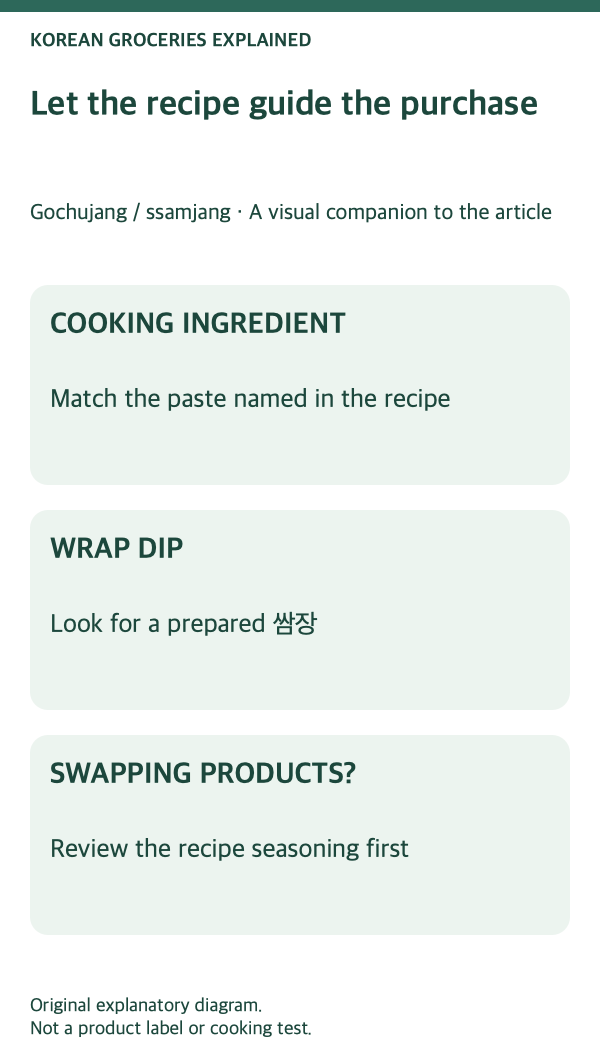
Can you swap them?
Treat a swap as a change to the dish, rather than an equal replacement. The added seasonings in ssamjang mean that changing the amount alone will not recreate a particular gochujang. Use the recipe author's substitution advice, or choose a recipe written for the paste you already have.
Before checkout, check ingredients, allergen information, pack size and storage directions on your current package. Neither paste's name confirms that it meets a dietary requirement.
Sources checked on October 13, 2026. Product examples explain shopping differences; they are not taste-test rankings. Formulations and packaging can change.